
The harp is a magnificent, delicate instrument that rewards players with its warm, resonant voice and timeless beauty. To ensure your harp continues to sing beautifully for years to come, proper care and maintenance are essential. Whether you are a beginner just starting out or an experienced harpist, understanding how to care for your harp will not only protect your investment but also enhance your playing experience.
This Harp Care Handbook offers simple, practical tips to keep your instrument in top shape, from regular tuning and cleaning to environmental protection and professional servicing.
The Importance of Regular Tuning
One of the most fundamental tasks in harp care is tuning. Harp strings naturally stretch and loosen over time, especially after playing. This can cause your harp to fall out of tune, affecting its sound quality and your enjoyment.
Why Tune Regularly?
Regular tuning not only keeps your harp sounding harmonious but also maintains the proper tension on the strings, which supports the structural integrity of the instrument. Tuning before every practice session is recommended to ensure the best sound and avoid extreme tension shifts that could damage the harp.
How to Tune Your Harp
- Use a tuning key designed for harps to adjust individual string tension.
- An electronic chromatic tuner or a tuning app on your phone can provide accurate pitch reference.
- Start tuning from the lowest string and work your way upward.
- Tune slowly and gently to avoid snapping strings.
- Learn to recognize the correct pitch by ear as you gain experience.
Consistent tuning habits help your ear develop and contribute greatly to your playing success.bayareaharpacademy+1
Cleaning Your Harp: Keep It Dust-Free and Gleaming
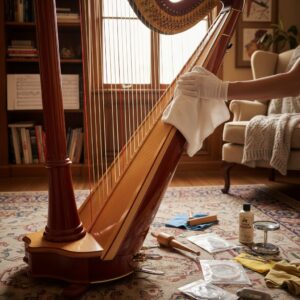
Dust, dirt, and oils from hands can accumulate on your harp, diminishing its appearance and, in some cases, its sound. Cleaning your harp regularly is essential to preserve its finish and keep it looking and sounding its best.
Cleaning Tips
- Use a soft, dry microfiber cloth to wipe down the soundboard, strings, and frame after each practice.
- For tougher grime, a slightly damp cloth with gentle soap can be used. Avoid harsh chemicals or excessive moisture that can damage the wood or tuning components.
- Pay special attention to the tuning pins and string grooves where dust may collect.
- Consider string cleaners occasionally to remove oils and extend string life.
Always clean your harp gently to avoid scratching the finish or disturbing delicate components.harmonyharp+1
Protecting Your Harp from Environmental Damage
Harp wood and strings are sensitive to environmental conditions. Exposure to temperature fluctuations, high humidity, or direct sunlight can cause warping, cracking, tuning instability, or other damage.
How to Protect Your Harp
- Keep your harp in a stable environment with room temperature around 68-72°F (20-22°C).
- Avoid placing your harp near heaters, air conditioners, or windows where sun exposure is intense.
- Use a harp cover or case when not playing to shield it from dust and accidental bumps.
- Consider using a humidifier or dehumidifier in your practice space if needed to maintain optimal humidity (40-60%).
Proper storage and environmental control are crucial for the long life of your instrument.bayareaharpacademy+1
String Care and Maintenance
Your harp’s strings are vital to its voice and require regular attention.
String Maintenance Tips
- Wipe strings after playing to remove natural oils and sweat that can degrade them.
- Change worn or damaged strings promptly to maintain tonal quality.
- Keep a few spare strings of each type handy for quick replacement.
- When tuning new strings, be patient; they may stretch and require frequent tuning until settled.
Good string care improves sound and reduces costly repairs.littlekalimbashop+1
When to Seek Professional Maintenance
While many care tasks are beginner-friendly, your harp will occasionally need specialized professional attention to keep it performing optimally.
Why Professional Servicing Matters
- Professionals can perform advanced tuning regulation and adjustment of pedal or lever mechanisms.
- They inspect structural elements like the soundboard, pin block, and neck for early signs of wear or damage.
- Technicians repair buzzes, rattles, and other mechanical issues that can affect playability.
- Periodic professional check-ups can extend the life of your harp considerably.
A good harp technician is an invaluable partner in your musical journey.manufacturing.dustystrings+1
Safe Transport Tips for Your Harp
For musicians on the move, transport can put your harp at risk of damage.
Transporting Your Harp Safely
- Use a padded harp case that fits your instrument snugly.
- When moving the harp, handle it carefully and avoid sudden jolts.
- Use furniture dollies or specially designed harp carts for larger pedal harps.
- Never leave the harp in a hot car or exposed to outdoor elements for extended periods.
Safe transport protects the delicate mechanisms and finish from accidents and environmental stress.bayareaharpacademy
Additional Care Tips
- Avoid placing drinks or food near the harp to prevent spills.
- Regularly check tuning pins and levers for tightness and responsiveness.
- When not in use for extended periods, loosen the strings slightly to relieve tension.
- Clean your hands before playing to minimize transferring oils and dirt.
- Keep instructional videos, manuals, or trusted online resources handy for specific maintenance guidance.